Saturday, March 21, 2015

In the Service of What?


In the Service of What?
By Joseph Kahne and Joel Westheimer
 I agree the quote presented in the beginning of this article and the quote stated by President John Kennedy, “...ask not what your country can do for you; ask what you can do for your country” (Westheimer) 1. To me this quote is definitely talking to all teachers, or all in that field, and that being in this field is also like serving our country as well. I remember this quote has been rephrased many times over my high school year and even now in college. A quote I like and just saw for the first time by Ronald Reagan stated, “Are you better off today than you were four years ago?” (Westheimer)1. This quote made me think how far I have come and thanks to education, I have learned and still have many more years to go in accomplishing my dreams.
I have experience doing a community service, once in middle school, and it was fundamental and educational. Like how Kahne and Westheimer has stated, “...students would interact with those less fortunate than themselves and would experience the excitement and joy of learning while using the community as a
classroom” (Westheimer) 3.

The only difference between the community service mention by Westheimer and the community service I encounter was that I had to do some community service to find a job. The similarity was that I learned mentally and socially what it meant to cooperate with others and serve our community. At the end I didn’t get a job but had a great experience and learned among peers my age.


I agree with Westheimer’s statement “Both provide authentic learning experiences, reflection on matters of social concern, and opportunities for interdisciplinary study linked to curricular goals” (Westheimer) 3. Relating to Wesdtheimer’s statement, I did some community service at a church during my freshman year. It was very rewarding and loving when I got to tutor those kids and they were able to reflect back on the works I thought them. Knowing how passionate it is, doing that community service, I was determined to continue my goals and my dream in the education field. Thinking about community service, it relates to “Privilege, Power and Difference” by Allan G. Johnson. It is a privilege that we are able to tutor at community centers and schools that connects to the FSNED program at RIC. Doing some community service helps improve our skills how to dealing with kids and what we can learn from them as well.
When Westheimer mention, “The curriculum theorists and education reformers wanted students to engage in service learning projects so that they would recognize that their academic abilities and collective commitments could help them respond in meaningful ways to a variety of social concerns” (Westheimer) 4. It reminds me of doing a high school project, in the field we are interested in, and I did an education topic where I was able to observe and tutor a teacher’s class.  In this tutoring session, I was able to obtain more information about the respectable and corrupt things in the teaching field. 


Here are is a link to a video from a community service I was involved in 2012: 

Bibliography

Johnson, Allan G. "Privilege, Power, and Difference." 2001: VII-35.
Westheimer, Joseph Kahne and Joel. "In the Service of What?" The Politic of Service Learning 1996: 1-14.


Sunday, March 8, 2015

Unlearning the Myths That Bind Us


Unlearning the Myths That Bind Us
By Linda Christensen

I agree with Linda Christensen's statement about the “secret education” stating that, “children's books and movies, instructs young people to accept the world as it is portrayed in these social blueprints” (Christensen)126. A connection to our previous class, we talked about how the society only portrayed the image of some heterosexual lives in kids’ books and movies instead of showing them the reality of people who are heterosexual and LGBT. An example, from our society is the Disney princesses and prince. Their portrayed image for a child is a prince marrying a princesses or a “King and a queen” as Professor Stevos had said. It’s never about a queen marrying a queen or a king marrying a king but about boy and a girl.

It is true that we all are “handled’ by the media” (Christensen)128. I remember when I was a freshman in high school and taking a summer writing class to increase my skill in literature and a debate was held whither we need the media/technology or not and I was against media/ technology and won the debate.  The media has all kind of impact on people, for example, they portray the image they want kids to learn, they expose secrets that are meant to be kept private and use it to ruin peoples’ lives. Yes, indeed that media have, “...influence how I behave, think, react to things...” (Christensen)129. If it wasn’t for the media, I wouldn’t be who I am today. The media made me act and think a certain way, but if there were no media involved in people’s life there wouldn’t help us define who we are today. 

Back then, media exposes more stereotypes than today’s media and some example of stereotypes roles that are displayed in “Ali Baba and the 40 Thieves, Popeye, action movies,” (Christensen)130. These entertainment display stereotypes how man, women, servant, and people of color should act. But in reality no women would stay home 24/7 and wear high wheels every day while baking or no “Men must be virile and wield power or be old and the object of ' good-natured' humor” (Christensen)131. It’s quite sad about the statement Christensen stated in “Black Cinderella” that “Women who aren't white begin to feel left out and ugly because they never get to play the princess” (Christensen)131. In relation to “Privilege, Power and Difference” by Johnson, being white gives them the power. Being a little girl of different race doesn’t give them the privilege of being the princess because they are different. 


In total agreement with Christensen’s statement about Cinderella “I don't want students to believe that change can be bought at the mall...” (Christensen)133. In my explanation, Cinderella’s story was about competition and fashion to win a men’s heart, it’s actually the wrong form of education that kids should be learning these days. In reality, love does not need competition or fashion but kind personality, respect, and generosity. It’s ridiculous that, “The Barbie syndrome starts as we begin a lifelong search for the perfect body” (Christensen)135.  Some of the things that we do without thinking that it’s a stereotype to look good are by putting on makeup and I dislike how most girl, “…feels awkward going to the mailbox without makeup,” as Christensen has stated on page 136.


Bibliography


Christensen, Linda. "Unlearning the Myths That Bind US." 2003: 126-137.
Johnson, Allan G. "Privilege, Power, and Difference." 2001: VII-35.


Here is a website  related to Disney Stereotype :


Sunday, March 1, 2015

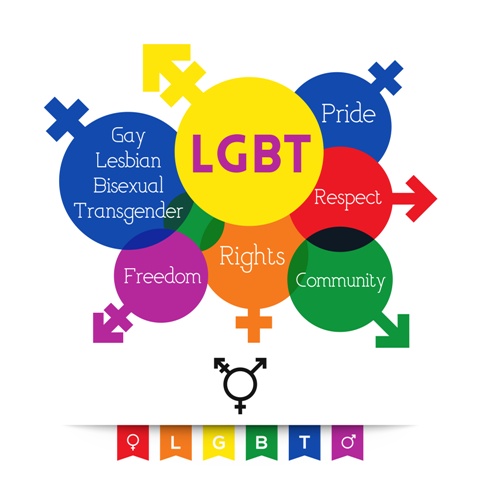
Speaking the Unspeakable in forbidden places: addressing lesbian, gay, bisexual, and transgender, equality, in primary school


Speaking the Unspeakable in forbidden places: addressing lesbian, gay, bisexual, and transgender, equality, in primary school


Whenever we think of schools, what first came to our head is, “...place of safety and innocence; a place where children is both natured and sheltered…” (Alexandra Allan). When the school becomes this secure, sexuality becomes monitored and prohibited, where students aren’t able to express themselves. I remember there was a gay student in high school, and other students dislike the fact that he was gay and they fought him. The teachers did break the fight but did not help prevent any bullying upon students who were gay or has sexuality difference. They did not hold any assembly to talk about sexuality or bullying. This alleged that sexuality probably was prohibited in that school or as Alexandra Allan and the rest of the authors has stated, “...identities are made absent in one sense through the fact that they are not addressed in formal school contexts...”
I like how this article uses a fairytale to help introduce sexuality identities to children. The experiment was successful, and the children did understand that even princes or princesses don’t have to marry a prince or a princess. With the quote, “...he has to meet all these princesses but doesn't want to marry any of them...” (Alexandra Allan) it makes me think twice on what the prince really wants. Some of the questions that came up when I was reading about Cindy’s experiment are what if the prince is gay? Or the princess is lesbian? Is it alright? According to Cindy, it is OK that princes and princesses have a different sexual identity. Not everyone have an identical identity.  I agree with Allan’s statement, “...teachers should take responsibility for helping pupils to recognize sexuality and thereby work towards greater social justice” (Alexandra Allan).
The problem of sexuality that people had while growing up in heterosexuality society is trying to fit in. Due to confusion, and anxiety, kids would feel different. Do to their differences, kids were bullied and ignored by most teachers and the school’s staffs. I believed that a child growing up with identity difference, being bullied and ignored can cause them to become corrupted in the future. More likely, I believed that some even commits suicide and it’s what all adults should help prevent.

On the other hand, I dislike how sets of books on sexuality were “unpacked on staffroom tables [in schools] and left for teachers to browse at their leisure” (Alexandra Allan). Children should be introduce to sexuality as soon as possible so, as they grow up, they should have a clear understanding of identity difference that would help prevent future chaos and decrease bullying. Relating to “Privilege, Power and Difference” by Allan G. Johnson, the teacher are the ones who have power over the children while the principles having the power over the teachers. In this case, it was the principles’ duty to enforce the learning of “LGBT” (lesbian, gay, bisexual, transgender) and the uses of LGBT books. But I don’t blame them because it wasn’t their fault that their society is probably made up of heterosexual people or the principle grew up knowing heterosexual themselves.  
A question that pop up in my head are: what would you do if you were told by the school board to teach a few class about LGBT in your school and knowing that as the principle, most of your children comes from heterosexual background and most of their parents already made voices notifying not to teach of LGBT in school?

Bibliography

Alexandra Allan, Elizabeth Atkinson, Elizabeth Brace, Renee Deplama. "Sex Education." Speaking the Unspeakable in forbidden places:addressing lesbian, gay, bisexual, and transgender, equality, in primary school August 2008: 315-328.


Johnson, Allan G. "Privilege, Power, and Difference." 2001: VII-35.